
Concussion Rehabilitation in Tigard, OR
A Concussion Can Affect More Than You Think
A concussion can leave you with more than a headache. You may feel dizzy or unsteady, become overwhelmed by movement or busy visual environments, have trouble concentrating, or notice that exercise and everyday activities bring symptoms back.
Care Begins With Evaluation
At BeWell Chiropractic, we look at what changed after the injury and how those changes are affecting your function now. Your history, symptoms, movement, balance, coordination, eye movements, neck function, and response to activity can all provide useful clues.
Care is based on the findings. If something needs medical evaluation or another specialist is a better fit, we’ll tell you.
Concussion rehabilitation at BeWell is intended for appropriate post-injury care and persistent symptoms. A new or worsening head injury should receive appropriate medical evaluation.
Concussion Symptoms Don’t Always Look the Same
Some people mainly notice headaches or neck discomfort. Others struggle with dizziness, balance, visual motion, concentration, coordination, fatigue, or exercise tolerance. You may feel fairly normal while sitting still, then notice symptoms when you walk through a busy store, turn your head, use a screen, or try to exercise.
The pattern matters. How symptoms started, what brings them on, what makes them worse, and what has improved can help determine which areas deserve a closer look.
Common Concerns After Concussion
Safety First
Know When Concussion Needs Medical Care
Seek Emergency Medical Care for Danger Signs Such As
- A headache that gets worse and does not go away
- Repeated vomiting
- Seizures or convulsions
- Increasing confusion, unusual behavior, or difficulty recognizing people or places
- Difficulty waking or staying awake
- Slurred speech, weakness, numbness, or a significant loss of coordination
- One pupil larger than the other or other concerning neurological changes
If your immediate medical needs have been addressed and symptoms are lingering, a more detailed functional evaluation may help identify areas that are still interfering with recovery.
Balance and Movement Depend on Several Systems Working Together
Vision
Your visual system helps you track movement, focus, orient to your surroundings, and keep visual information stable while you move.
Vestibular Input
Structures in the inner ear provide information about head movement and orientation. This input works closely with vision and the rest of the nervous system to support balance.
Body-Position Information
Sensory receptors in muscles and joints provide information about where your body is positioned and how it’s moving. This is part of proprioception.
Together They Support Balance, Orientation & Coordinated Movement
After a concussion, symptoms can appear when these systems are challenged together. That can help explain why someone may feel okay at rest but become dizzy, unsteady, visually overwhelmed, or symptomatic during walking, head movement, exercise, or other real-world activity.
We Start With What Happened and What Changed
Your visit begins with your story. Dr. Crokin will want to understand how the injury happened, what symptoms appeared, what has improved, what still feels different, and which activities bring symptoms on.
The examination then follows the pattern of your symptoms. Depending on your history and presentation, Dr. Crokin may evaluate areas such as:
- Balance and postural control
- Coordination and movement quality
- Eye movements and response to visual or motion challenges
- Head and neck movement
- Cervical joint and muscle function
- Body-position awareness and sensory responses
- Response to progressively more demanding movement or activity
Not every patient needs every test. The useful findings are the ones that help clarify what should happen next.
What if my CT or MRI was normal?
Normal structural imaging can be reassuring, but routine CT or MRI is not designed to measure every functional effect associated with concussion. Symptoms, balance, eye movement, exertion, cervical function, and other clinical findings may still be relevant even when structural imaging does not show an abnormality.
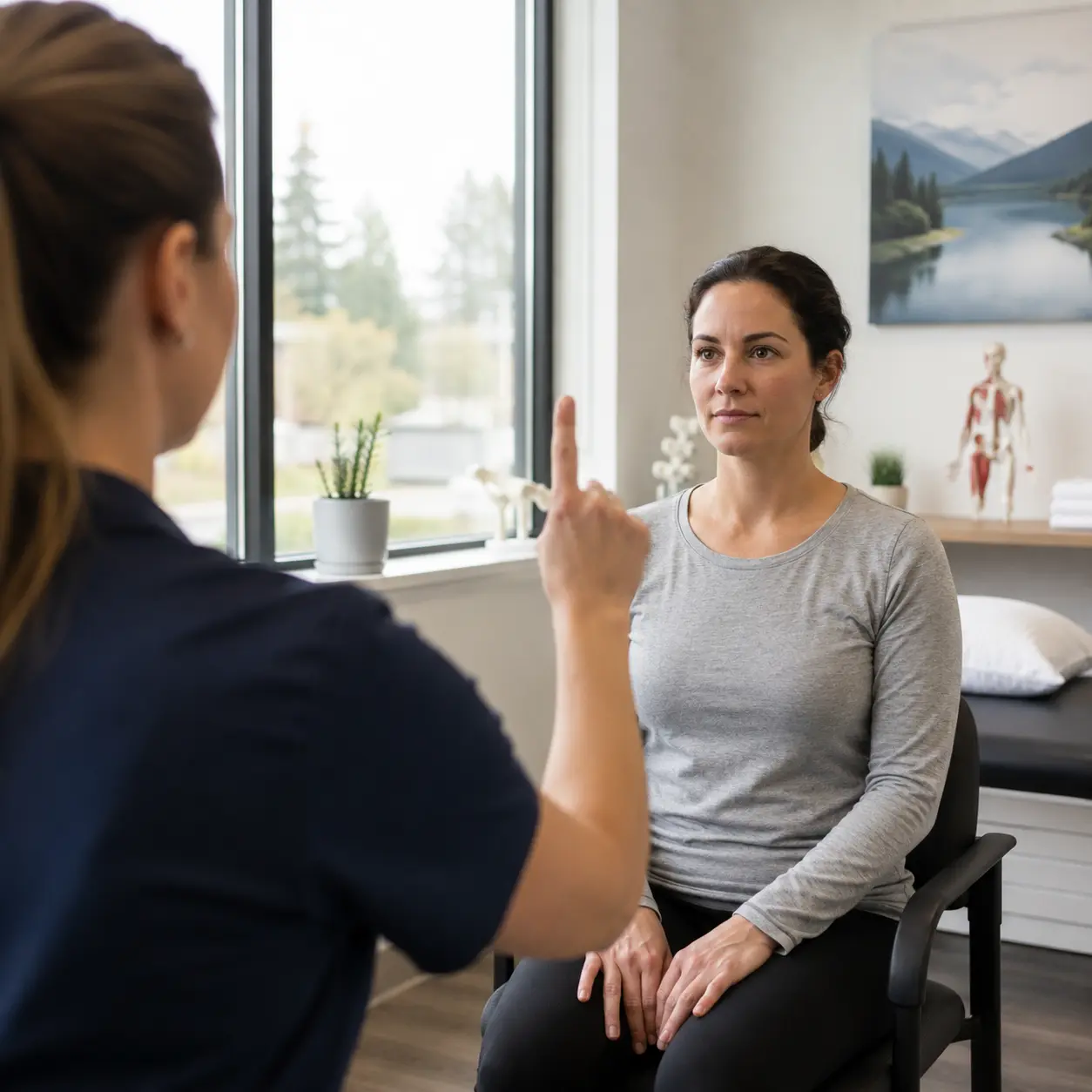
Eye-Movement Screening
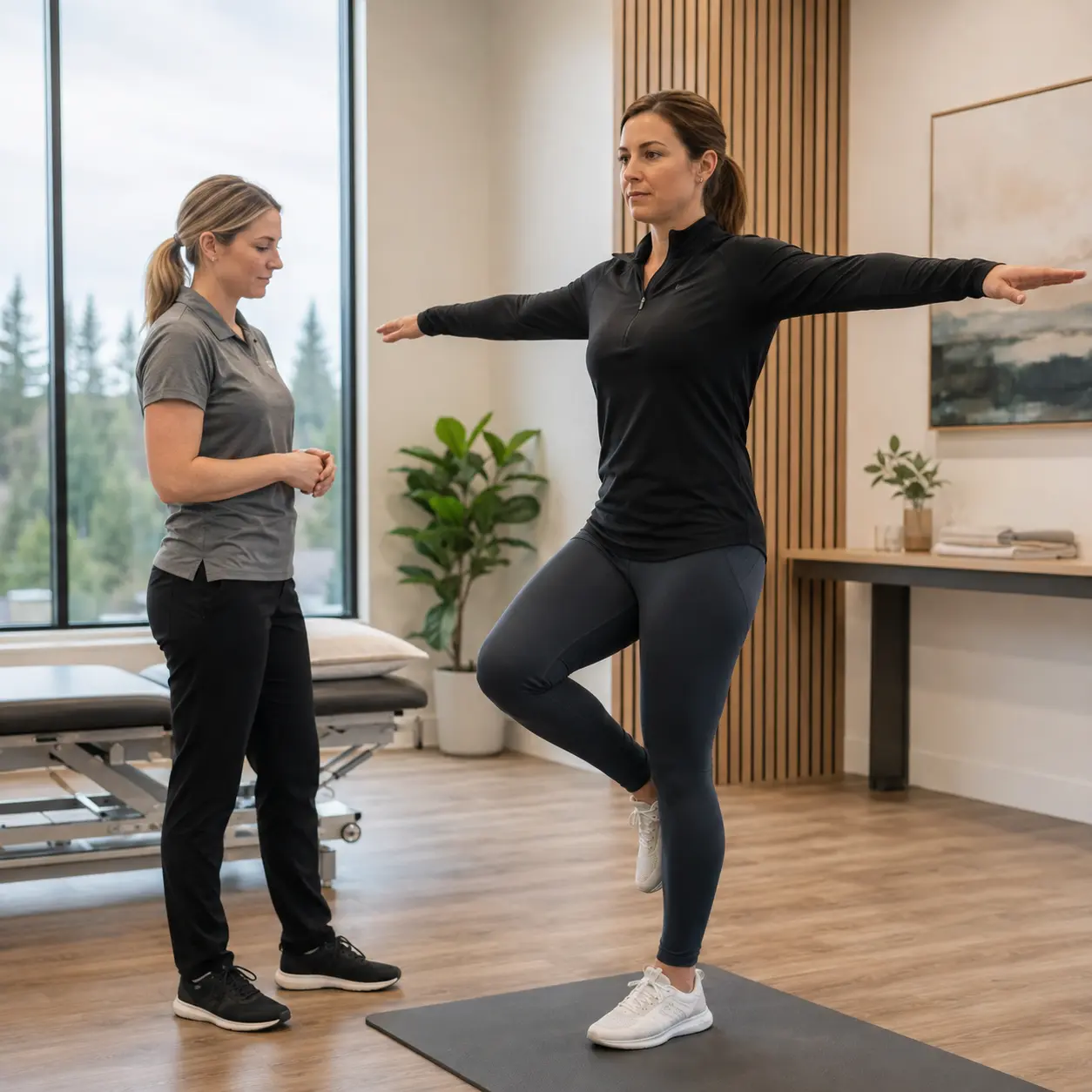
Balance & Movement Testing
Start With the Findings. Build From There.
Concussion rehabilitation is not one standard set of exercises. Care should reflect the symptoms and functional findings that are actually present.
Depending on your findings, rehabilitation may include:
Balance and coordination activities
Vestibular or head-movement exercises
Eye-movement or visual-motion exercises
Progressive movement and dual-task challenges
Subsymptom aerobic exercise or graded activity
Cervical rehabilitation when neck findings are present
A Deliberate Progression
One System at a Time, Then Life All at Once
Current concussion guidance favors a gradual return to activity rather than prolonged strict rest. The appropriate pace depends on your symptoms, your stage of recovery, and the activities you need to return to.
Phase 1
Simple & Controlled
Phase 2
Combined Challenges
Phase 3
Integrated & Functional
The Neck Can Matter Without Being the Whole Story
Dr. Crokin does not assume that every concussion symptom comes from the neck. In the early stages after trauma, care may also need to be more conservative and focused on what the patient can tolerate.
Collaboration and Referral Are Part of Responsible Care
Persistent concussion symptoms can involve vision, vestibular function, headache, cognition, sleep, mental health, exercise tolerance, or other concerns that may require another clinician’s expertise. When that is the better next step, BeWell may recommend collaboration or referral to an appropriate medical or rehabilitation provider.
A useful evaluation should narrow the direction of care, not force every finding into one treatment.
Recovery Is About Getting Back to What You Need to Do
Rehabilitation should gradually reconnect those demands as you improve. The amount and type of activity should be guided by symptoms and clinical findings, with progression adjusted when symptoms meaningfully worsen.
For Athletes
Returning to sports after concussion should follow a graduated return-to-play process under the guidance of an appropriate healthcare provider. Activities with a risk of another head impact, collision, or fall require particular caution and should not be resumed simply because you feel better at rest.
BeWell can address appropriate rehabilitation findings and coordinate with the medical, sports, or rehabilitation professionals involved in your recovery when needed.
Frequently Asked Questions
Chiropractic care may be appropriate when neck pain, restricted cervical movement, headache, muscle or joint findings, or other relevant musculoskeletal factors are part of the presentation. Concussion rehabilitation may also involve balance, vestibular, visual, coordination, and graded exercise strategies depending on the findings.
Head movement changes vestibular and visual information at the same time. After concussion, some people become symptomatic when those systems are challenged. Evaluation can help determine whether vestibular, cervical, visual, or other factors deserve attention.
Routine CT and MRI are used to look for structural problems and may be normal in concussion. A normal scan does not automatically explain persistent functional symptoms such as dizziness, balance difficulty, visual sensitivity, headache, or exercise intolerance.
Recovery varies. Many people improve within days or weeks, while some have symptoms that persist longer. Symptoms that are worsening, not progressively improving, or continuing to interfere with normal activity deserve follow-up with an appropriate healthcare provider.
Usually not. Current concussion guidance supports a short period of relative rest followed by a gradual return to light physical and cognitive activity as tolerated, while avoiding activities that risk another head injury.
Yes. Concussion can involve visual and eye-movement symptoms such as difficulty tracking, focusing, or tolerating visual motion. Significant or persistent visual symptoms may also warrant evaluation by an appropriately trained eye-care professional.
Start With What Changed
Tell us what happened, what changed afterward, what has improved, and what still brings symptoms on. Dr. Crokin can evaluate the relevant areas of function and help determine whether rehabilitation at BeWell, collaboration with another provider, or a different next step makes the most sense.